

A Spring Capsule Wardrobe for Under $500: The Exact 22-Piece Checklist
Last spring I did something I had never done before: I gave myself a hard budget of $500 and a rule that I could only buy 22 pieces for the whole season. No extras, no “just one more top,” no sale-rack impulse buys. I wanted to find out if a real spring wardrobe — one that covers work, weekends, dinners out and a wedding or two — could actually fit inside $500. It could. I spent $468, I wore every single piece, and I made more than 40 outfits from those 22 pieces. Getting dressed took five minutes most mornings, and I stopped standing in front of a full closet thinking I had nothing to wear.
The trick was not finding the cheapest clothes. Cheap clothes that you never wear are the most expensive clothes you own. The trick was choosing 22 pieces that all work together, in colours that mix, in fabrics that suit spring, and at prices that leave room for the pieces that matter most. In this guide I will show you the exact 22 pieces, what each one should cost, and how the outfits add up. The prices I give are typical high-street price ranges, the kind of prices I actually paid — not a promise that any one shop will have that exact price today. Prices change, sales come and go, and your closet may already hold half of this list.
How this capsule works
Here are the 22 pieces, grouped the way I shop for them. Spring is a season of changing weather, so every piece here layers: a light jacket over a tee, a cardigan over a dress, a scarf when the morning is cold and the afternoon is warm. The colours are white, cream, navy, sage green and soft blush, with light-wash denim. Everything mixes with everything, so you never stand there holding a top that goes with nothing.
The tops (6 pieces): white cotton shirt, Breton stripe tee, sage-green fine-knit sweater, white crew-neck tee, navy short-sleeve blouse, blush linen-blend tee.
The bottoms (4 pieces): light-wash straight-leg jeans, cream wide-leg trousers, navy pleated midi skirt, white ankle-length trousers.
The dresses (2 pieces): navy floral midi dress, white eyelet midi dress.
The layers (4 pieces): white linen blazer, cream trench coat, sage-green cardigan, light-wash denim jacket.
The shoes (3 pairs): white leather sneakers, tan strappy flat sandals, nude block-heel sandals.
The accessories (3 pieces): straw tote bag, small tan crossbody bag, silk scarf in sage green and cream.
Before you buy anything, check your own wardrobe first. I already owned the white shirt, the jeans and the denim jacket, so my real spend was even lower than $468. A capsule works best when it is built around what you already own and love, not when you start from zero. Now here is how each group earns its place, and the budget each piece deserves.
1. The tops and bottoms: 10 pieces, dozens of pairs
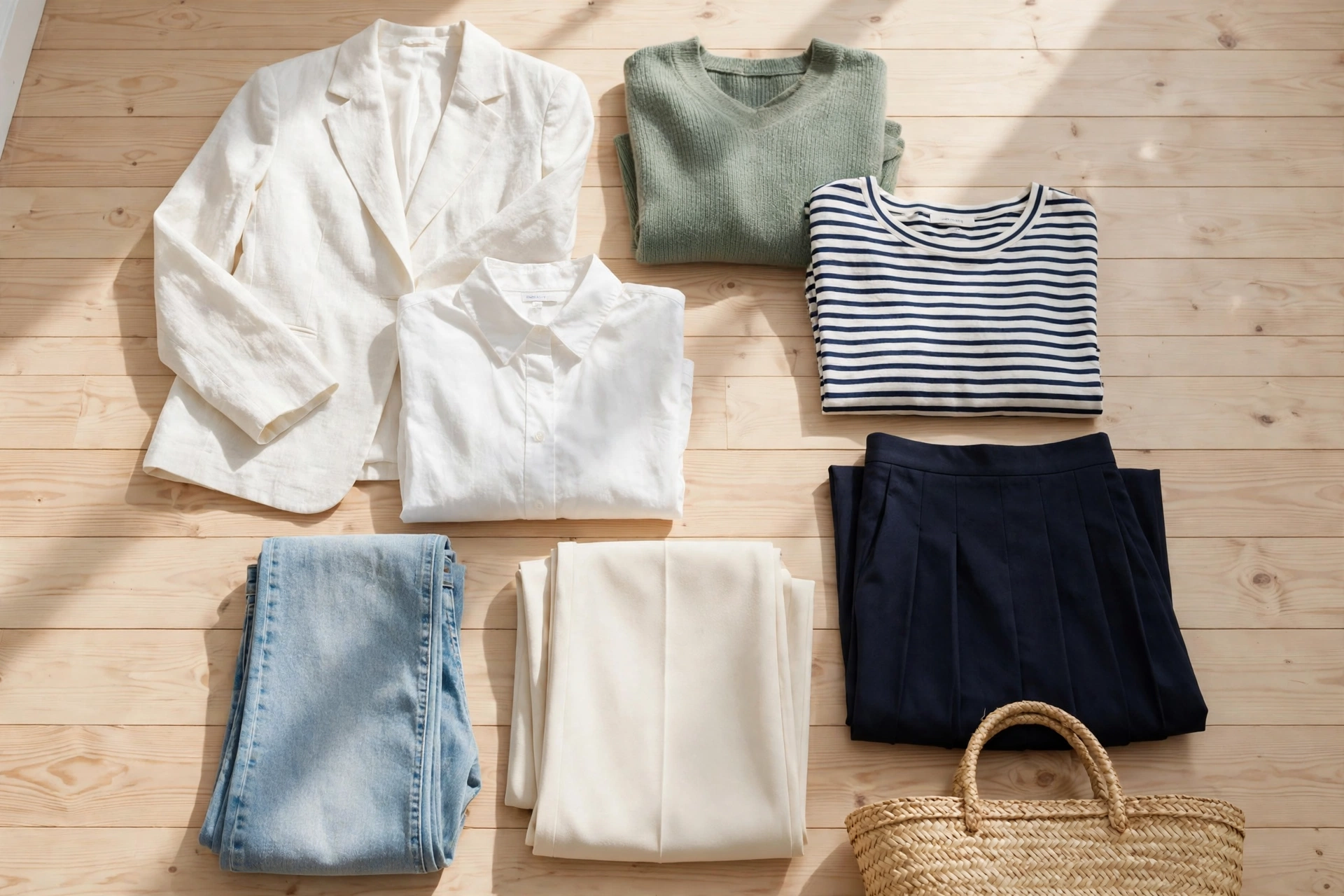
The tops and bottoms are the engine of this capsule. Ten pieces, and they make dozens of pairs on their own. My rule for every top is simple: it must work with at least three of the bottoms, and it must layer under at least two of the jackets. If a top only goes with one bottom, it is not earning its place in a 22-piece wardrobe.
The white cotton shirt is the hardest-working piece I own, in every season. In spring I wear it tucked into the cream trousers with the sandals for work, open over the white tee with jeans on weekends, and knotted at the waist over the navy skirt for lunch out. I paid about $30 for mine. My tip: buy a shirt with a little weight to it, not the thin see-through kind, and check the shoulder seam. It should sit right at the edge of your shoulder. A shirt that fits in the shoulders looks ten times more expensive than one that does not.
The Breton stripe tee is the only printed piece in the whole capsule, and that is on purpose. One print is enough to keep things interesting, and navy and cream stripes go with every bottom I own. I wear it with jeans and sneakers for school runs, and with the navy skirt and sandals when I want a French, effortless look. Mine cost about $25. My tip: keep the stripes classic and narrow. Wide, bold stripes can overpower a frame, while thin stripes add interest without adding bulk.
The sage-green fine-knit sweater is the piece that makes spring mornings bearable. I wear it with both pairs of trousers, with the jeans, and over the white eyelet dress as a light top layer on cool days. I choose a fine knit on purpose — a chunky knit is too warm for spring and too heavy under a blazer. Mine cost about $35. If you are between sizes, take the smaller one here. A neat knit looks polished, a baggy one looks borrowed.
The white crew-neck tee is the quiet workhorse. I wear it under the linen blazer with cream trousers for work, under the denim jacket with jeans on weekends, and tucked into the navy skirt with sandals when I want to look put together without trying. Mine cost about $20, and I buy two at a time because a good white tee is the one thing I always reach for. My tip: buy a tee with a little weight to it and wash it inside out. A white tee that stays white is worth more than a fancy one that goes grey after three washes.
The navy short-sleeve blouse is the dressiest top in the capsule. Tucked into the white trousers with the nude heels, it is a work outfit. Worn with jeans and flat sandals, it is a smart lunch outfit. Mine cost about $30. My tip: a short sleeve that ends just above the elbow looks smarter than a cap sleeve, and navy is kinder than black in spring light — it looks softer against the skin and it goes with every colour in this list.
The blush linen-blend tee is the colour moment of the tops. Blush is soft, warm, and it suits almost every skin tone. I wear it with the cream trousers and white sneakers, and with the jeans and the denim jacket. Mine cost about $25. Linen blends wrinkle less than pure linen, which matters on a long day. My tip: if blush feels too pale for you, try it against your face in daylight before you buy. The right blush makes you look rested. The wrong one washes you out.
For bottoms, the light-wash straight-leg jeans are my everyday pair — they work with every top and every shoe in this capsule. Mine cost about $40. My tip: light wash is the spring wash. Dark denim can look heavy in April light, while light wash looks fresh with white and cream. The jeans should end at the ankle bone, with no pooling and no bunching.
The cream wide-leg trousers are my favourite piece in the whole list. They make any top look elegant, they are comfortable enough to sit in all day, and they look just as good with sneakers as with heels. Mine cost about $35. My tip: cream trousers need a smooth, opaque fabric. Hold them up to the light in the shop. If you can see your hand through them, they will show everything, and no one needs that.
The navy pleated midi skirt adds movement and softness to a capsule that could otherwise feel too tailored. I wear it with the white tee and flat sandals, and with the navy blouse and nude heels. Mine cost about $30. My tip: a pleated skirt should end just below the knee or at mid-calf, never right at the widest part of the calf. A skirt with a slit helps too — the slit adds a vertical line that draws the eye down.
The white ankle-length trousers are the piece I was most nervous about, and the one I wore most. White trousers with the navy blouse, white trousers with the sage sweater, white trousers with the stripe tee — they go with everything, and they make a plain top look like a real outfit. Mine cost about $35. My tip: buy white trousers in a thick cotton twill, not a thin stretch fabric, and always check the pockets. Pockets that gape open ruin the line of white trousers. Flat, hidden pockets are worth paying a little more for.
2. The dresses and layers: where the outfits come from
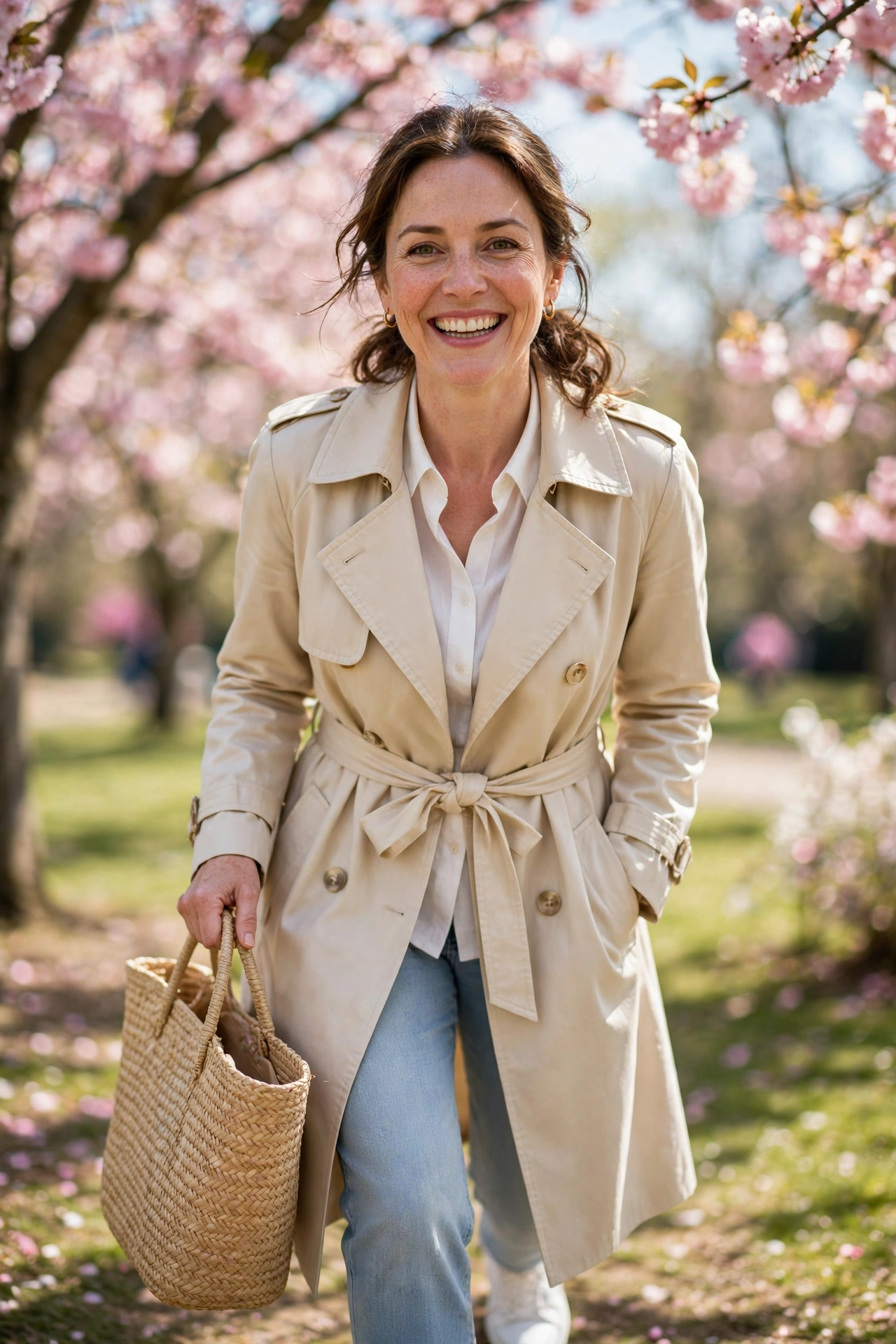
Two dresses and four layers might sound small, but this is the group that turns ten tops and bottoms into more than 40 outfits. A dress is a whole outfit in one piece, and a layer changes the look of everything underneath it. This is where the capsule multiplies — and where spring weather makes the layers earn their money, because a spring morning can be cold and the afternoon warm.
The navy floral midi dress is the piece I reach for when I have five minutes to get dressed. On its own with flat sandals, it is a complete outfit. With the white linen blazer and nude heels, it is a work outfit. With the denim jacket and white sneakers, it is a weekend outfit. One dress, three looks, no thinking required. Mine cost about $45. My tip: keep the print small and the background dark. A small floral on navy looks expensive and it hides wrinkles and crumbs, which is more useful than it sounds when you have children or a dog.
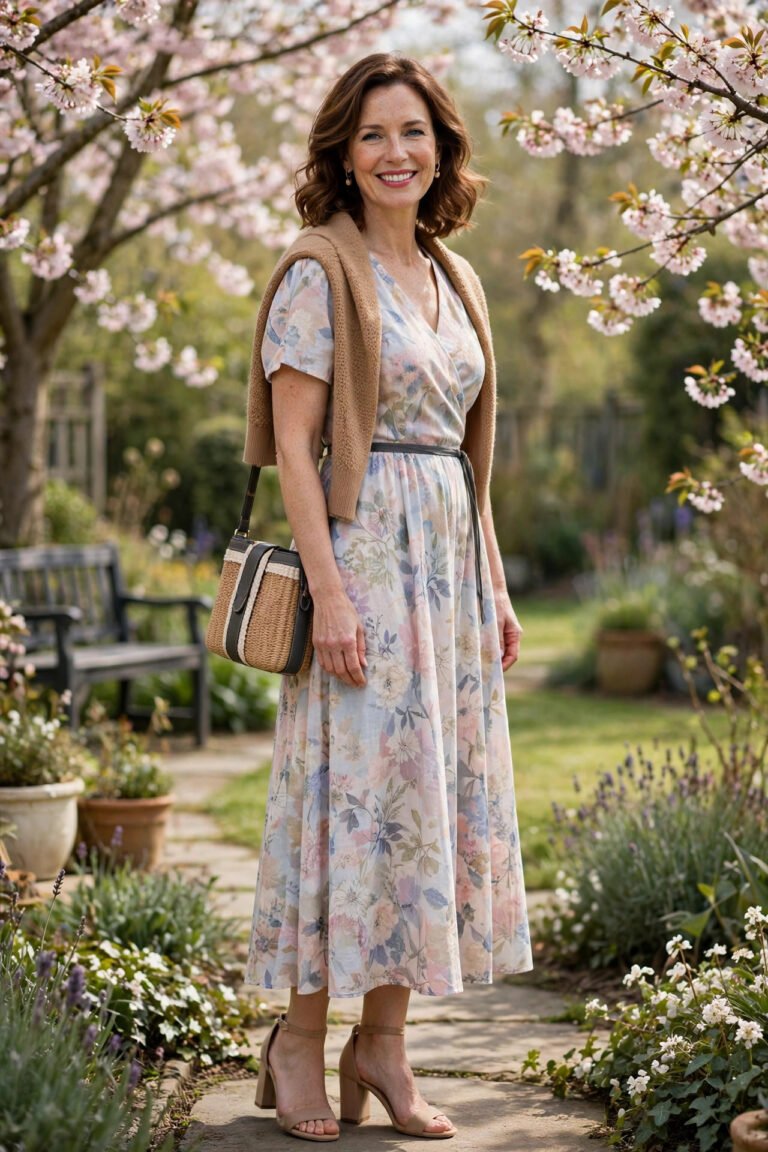
The white eyelet midi dress is the spring dress. Eyelet is that pretty broderie fabric with tiny cut-out patterns, and it is the one piece in this capsule that feels like a holiday. I wear it with flat sandals and the straw tote, and with the sage cardigan over it on cool evenings. Mine cost about $45. My tip: eyelet dresses are usually lined, and the lining is what makes them work. Check that the lining is long enough and that it does not ride up. A dress that needs constant adjusting is a dress you will stop wearing.
The white linen blazer is the piece I searched longest for, and it was worth the search. A white blazer makes a plain tee look like an expensive outfit, and it works over every dress and every pair of trousers in this list. Mine cost about $50 — the most I spent on any single piece, and the one I would buy again first. My tip: buy a linen-blend blazer, not pure linen, or you will spend your life ironing it. And check the sleeve length: the sleeve should end at your wrist bone, not over your knuckles.
The cream trench coat is the spring coat. It is the layer I wear most in April, over jeans and a tee, over the navy dress, over trousers and a blouse. Mine cost about $55, my second-biggest spend, and it was worth every penny because it makes every outfit underneath it look finished. My tip: a trench should end just above or just below the knee. A trench that hits at mid-calf shortens the leg, and a trench that is too short looks like a jacket. If you ever need one piece that works for a formal spring event too, a cream trench over a dark dress is a classic — and if you want to see how the same layering idea works in autumn, our guide to fall capsule wardrobe 2026 shows how 24 pieces make 40 outfits, with the same layering rules.
The sage-green cardigan is the soft layer. I wear it over the white dress on cool evenings, over the stripe tee with jeans, and buttoned up as a top with the cream trousers. Mine cost about $30. My tip: choose a cardigan with a fine knit and a clean, straight shape. A long, shapeless cardigan can make a spring outfit look heavy, while a neat cardigan that ends at the hip keeps everything light and balanced.
The light-wash denim jacket is the casual layer. I wear it over the navy floral dress, over the blush tee, and over the white shirt on mild days. It keeps the capsule from feeling too serious. Mine cost about $30. My tip: keep the denim jacket a classic light-blue wash with no rips or heavy fading, and choose one that ends at your waist. A cropped denim jacket defines the waist, shows the legs, and works with every bottom in this list.
3. The shoes, bags and the $468 maths
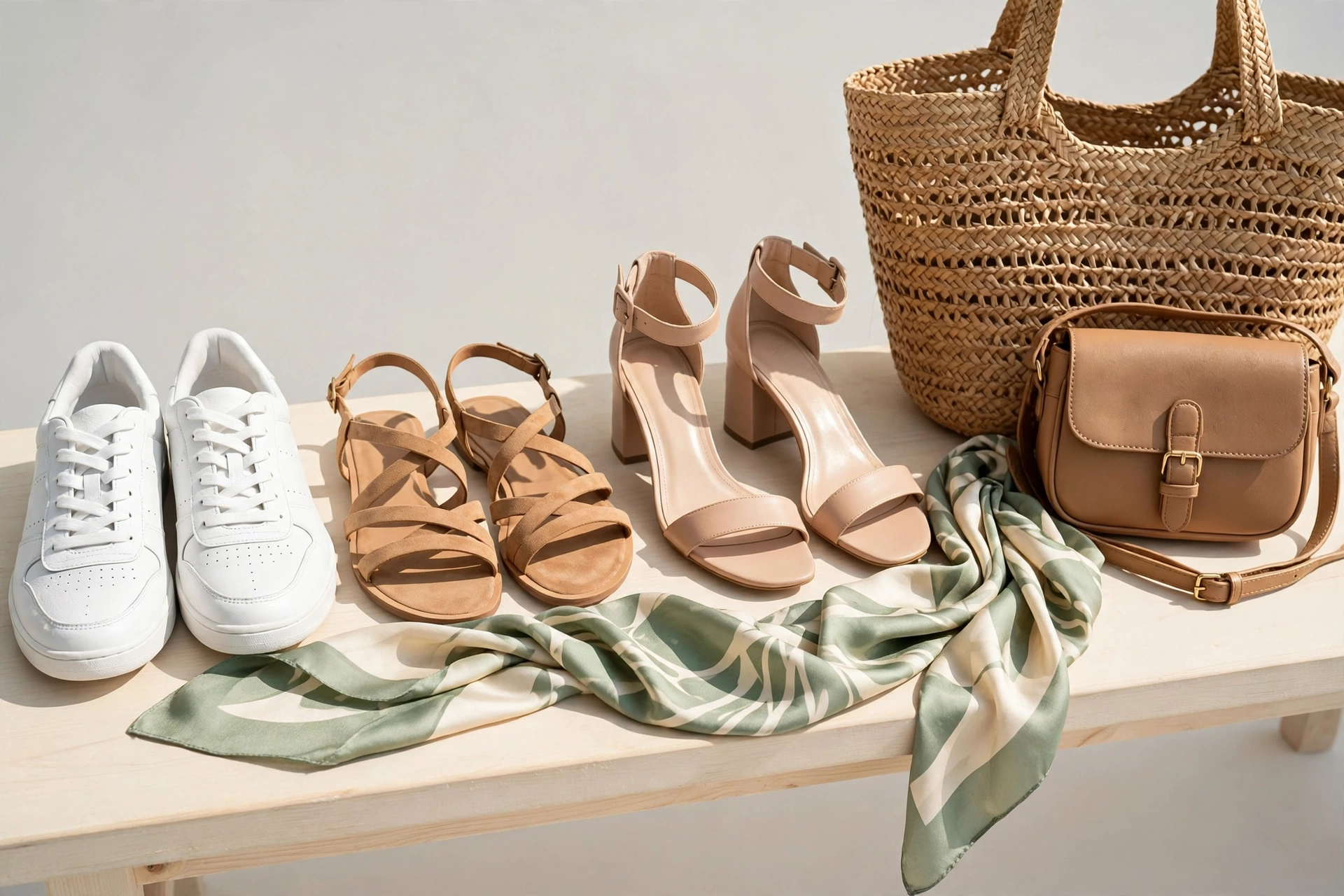
Shoes and bags are where a spring capsule either works or falls apart. Three pairs of shoes and two bags might sound like very little for three months, but each pair here has a clear job, and together they cover every day in my calendar. Spring feet need comfort, because the weather finally lets you walk everywhere again.
The white leather sneakers are my everyday pair. They go with jeans, with the cream trousers, and with the navy floral dress on weekends. I choose real leather, not canvas, because leather wipes clean and looks smarter with a blazer. Mine cost about $50. My tip: keep them low-profile and slim, and keep them clean — white sneakers that are grey and scuffed drag a whole outfit down, and a quick wipe once a week keeps them looking new for months.
The tan strappy flat sandals are my warm-day pair. They go with both dresses, with the navy skirt, and with the white trousers. Mine cost about $35. My tip: choose sandals with a low, flat sole and a strap that holds your foot properly. A sandal that flaps when you walk is a sandal you will kick off by noon. And break them in at home first. A blister on a spring day is a lesson you only need once.
The nude block-heel sandals are the dressy pair. They go with the navy blouse and white trousers for work, with the floral dress for a wedding guest outfit, and with the cream trousers for dinner out. Mine cost about $40, and the block heel is the reason I can walk in them all day. If you need ideas for comfortable low heels that still look polished, our guide to what shoes to wear to a fall wedding has nine kitten-heel outfits that last all night, and the same comfortable-heel rules work for spring too.
The straw tote carries my sunglasses, my water bottle and my life on spring weekends. The small tan crossbody is for evenings and errands, when I want my hands free. Mine cost about $25 and $30. My tip for bags: keep them in proportion to your frame and your day. A huge tote on a small frame looks like luggage, while a medium tote holds everything I need and still looks balanced. The silk scarf in sage green and cream is the smallest piece in this capsule and one of the most useful — I wear it at my neck with the white shirt, tied on the tote as a colour accent, and in my hair on windy days. A scarf adds colour without adding bulk, which is exactly what a spring outfit needs.
Now the maths. Here is what I actually spent, piece by piece, using typical high-street prices: tops about $175 in total, bottoms about $140, dresses about $90, layers about $165, shoes about $125, bags and scarf about $80. That adds up to more than $500 on paper — so how did I spend $468? Because I already owned the white shirt, the jeans and the denim jacket, and I bought the trench coat on sale. That is the honest truth of this capsule, and it is the point of it: you will not buy all 22 pieces from zero. Check your wardrobe first. Most women already own a white shirt, a pair of jeans and a denim jacket, and those three pieces alone save about $100.
The outfit maths is simpler. Six tops and four bottoms make 24 pairs on their own. Add two dresses and you have 26 base outfits. Each of the four layers changes those outfits — the same jeans and tee look completely different under a blazer, a trench, a cardigan or a denim jacket. That is how 22 pieces become 40 outfits and more. I stopped counting at 43, and I was still finding new combinations in June. The trick is not owning more. It is owning pieces that all talk to each other, in colours that mix.
What to avoid in a spring capsule under $500
A budget capsule fails for a few simple reasons, and I have made all of these mistakes. First, do not spend the whole budget on one expensive piece. A $200 jacket and 21 cheap pieces is not a capsule, it is a jacket with a pile of clothes you do not like. Spread the money evenly, and spend the most on the pieces you will wear most: the blazer, the trench, the shoes.
Second, do not buy spring clothes in winter colours. Dark, heavy colours make a spring outfit look like last season’s leftovers. Stick to the light palette — white, cream, navy, sage, blush — and the whole wardrobe will look fresh even when the pieces are simple.
Third, do not buy all 22 pieces in one weekend. Buy the tops and bottoms first, wear them for two weeks, and see what is missing. I bought my trench coat in the second month, after I realised I was reaching for the same old coat every day. A capsule built slowly fits your real life better than one bought in a rush.
Fourth, do not forget the weather. Spring is not summer. A capsule with no layers is a capsule you cannot wear in April. Every piece in this list layers, and every layer earns its place on a cold morning. That is the rule I check before I buy anything for spring: can I wear it on a cold morning and a warm afternoon?
Conclusion: 22 pieces, 40+ outfits, $468 spent
So, is a spring capsule wardrobe under $500 worth it? For me, yes, a hundred times over. Twenty-two pieces, more than 40 outfits, and a wardrobe that takes five minutes to dress from instead of twenty-five. I spent $468, I wore everything I owned, and I stopped buying clothes I did not need. Start with the tops and bottoms, add the dresses and layers, and check your own wardrobe first — you probably own more of these pieces than you think.
If you want more spring capsule ideas, I like Who What Wear’s spring capsule wardrobe guide — it walks through the season’s key pieces with the same mix-and-match thinking, and it shows how a few well-chosen pieces can carry a whole season. Then build your own 22, in your colours, for your week, inside your budget. A wardrobe that works is not about spending more. It is about having the right pieces, in the right colours, and knowing exactly what to do with them.


One Comment