
19 Fall Wedding Guest Dresses for Women Over 50 — With Sleeves, No Shapewear Needed
I have been to enough weddings to know the real question is not "what should I wear?" It is "what can I wear all day, sit in, eat in, dance in, and still feel like myself?" After 50, I stopped buying dresses that only looked good standing still in front of a mirror. I want sleeves that cover my arms, a fit that does not need shapewear, and a dress I can forget about once I put it on.
Fall is a kind gift for wedding guests our age. The fabrics are heavier and kinder, the colours are richer, and a sleeve is not a compromise — it is the whole point. A good sleeve keeps you warm, it finishes the outfit, and it means no shawl slipping off your shoulders during the vows.
This guide gives you 19 fall wedding guest dresses for women over 50, all with sleeves, and none of them need shapewear to look good. I have grouped them by sleeve style, so you can go straight to the length that suits you. The advice is simple and honest, the way I would talk to a friend who asked me what to wear.
A note before we start: these dresses are chosen to look good on a real body, with normal underwear, after a real wedding meal. If a dress only works with a lot of extra help underneath, it is not on this list.
Why sleeves are the smartest choice after 50
I used to think sleeves were something you settled for. I was wrong. A well-cut sleeve is one of the most flattering details a dress can have, at any age.
Three-quarter sleeves are my favourite. They end just below the elbow, they show a bracelet, and they keep you warm without hiding your hands. Long sleeves look elegant in the evening and suit formal weddings. Elbow sleeves and flutter sleeves are light and pretty for daytime, and they give you coverage without weight.
The trick is the fit of the sleeve itself. It should sit flat on your shoulder, not pull across the top of your arm, and not cut into your wrist. When I try on a dress, I raise my arms, I sit down, and I reach for something on a high shelf. If the sleeve pulls or rides up, I put the dress back. A wedding lasts five hours. The dress has to move with you.
Fabric matters just as much. Look for crepe, soft jersey, velvet, satin with a good lining, and chiffon with a lined bodice. These fabrics skim the body instead of clinging to it. I avoid thin, shiny polyester that shows every line, and stiff fabric that stands away from the body. If the fabric feels good in your hands, it will usually look good on you too.
Colour helps a lot in fall. Burgundy, forest green, navy, plum, chocolate brown, burnt orange, and deep teal all look rich in autumn light. These are colours that flatter mature skin, and they photograph beautifully. I stay away from pale pastels in late fall — they can wash you out in photos.
1. Three-quarter and elbow sleeves for daytime weddings — Dresses 1 to 7
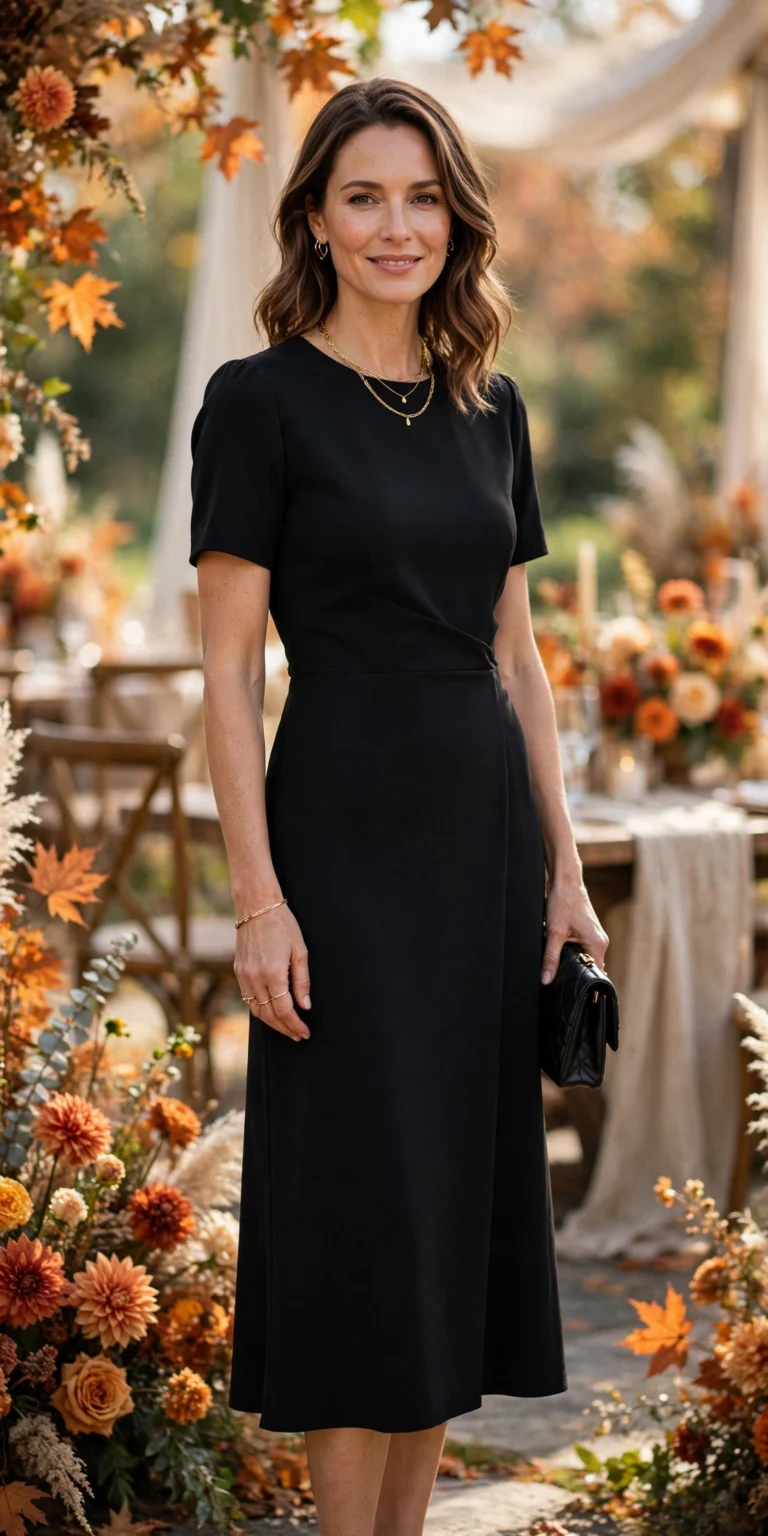
Daytime weddings are the most common kind I go to, and three-quarter sleeves are made for them. They give you coverage and warmth, and they look polished without feeling formal.
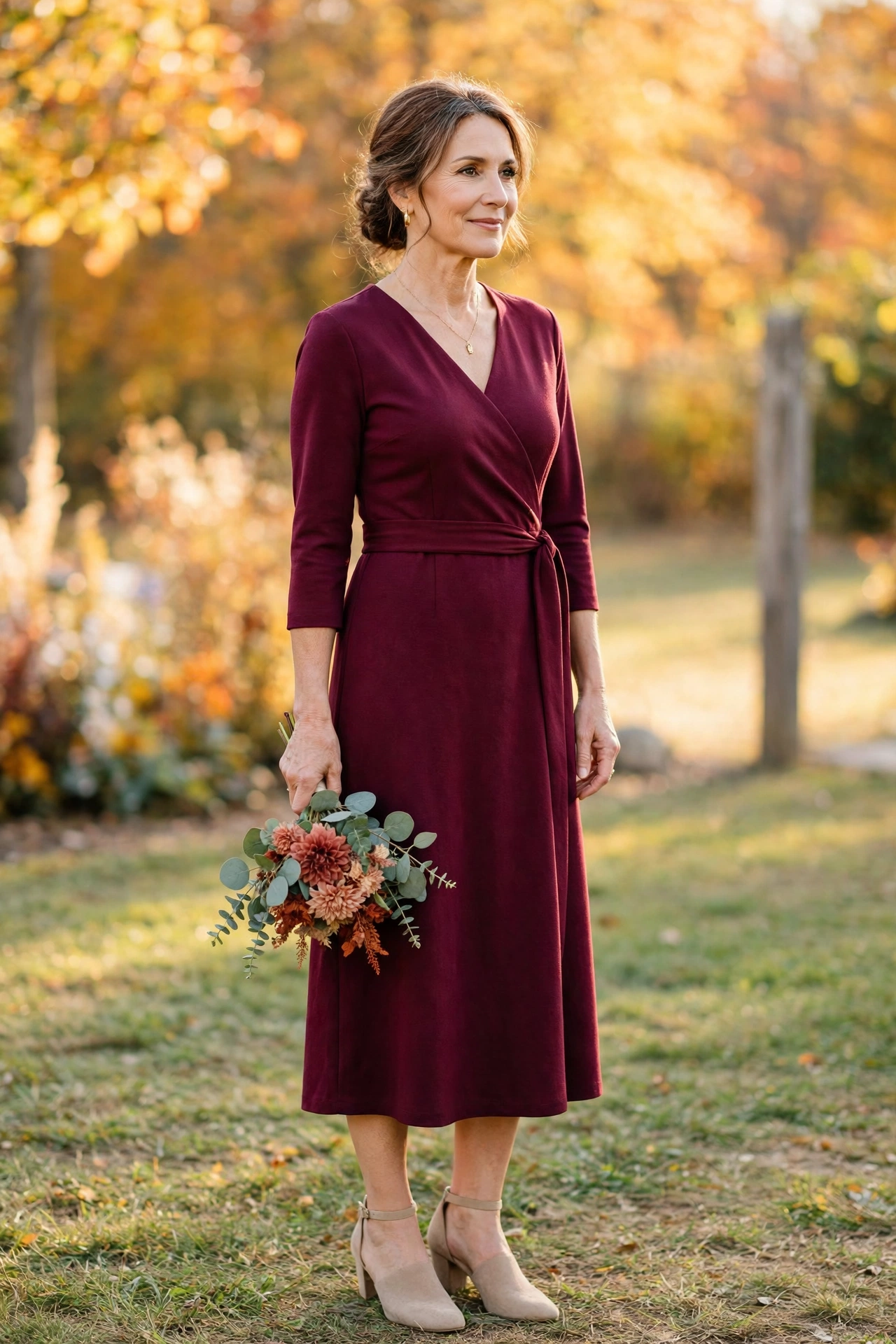
- A burgundy crepe midi dress with three-quarter sleeves and a gentle V-neck. This is my first pick for a daytime wedding. The V-neck is kind to the face, the crepe skims the waist without clinging, and burgundy looks rich in autumn light. I pair it with small gold earrings and a navy or black clutch.
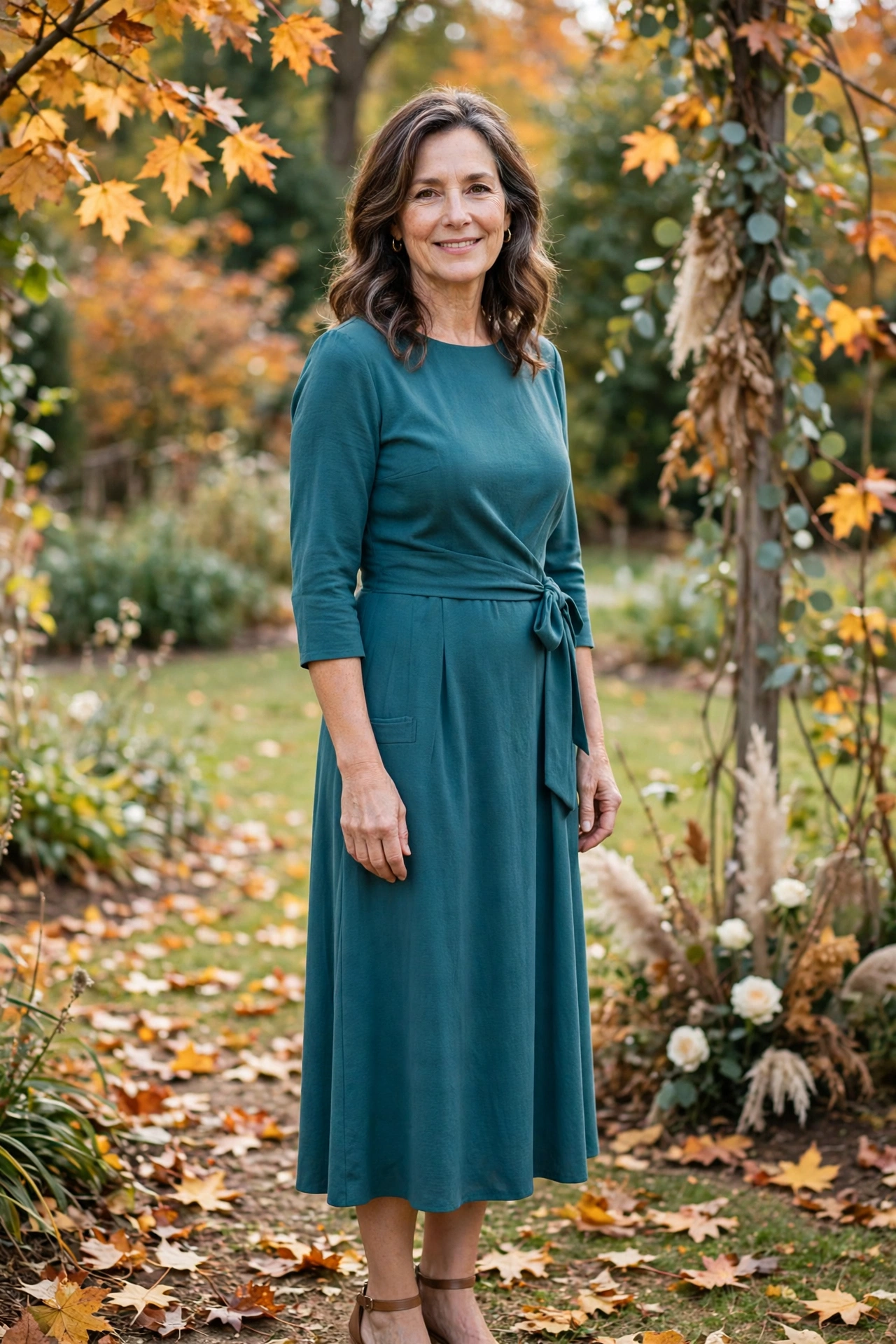
- A forest green wrap dress in soft jersey with elbow sleeves. I always reach for a wrap dress when I want a dress I can eat dinner in. It defines the waist without feeling tight, and the jersey moves with you. This one suits almost every body shape I know.
- A navy floral tea dress with three-quarter sleeves and a fitted waist. I tried a version of this at a garden wedding last fall, and I danced in it for hours. The print hides wrinkles, the flared skirt moves well, and navy is a colour that suits everyone.
- A plum chiffon midi dress with elbow sleeves and a lined bodice. Chiffon sounds light for fall, but with a lining and a light wrap it works well for a daytime wedding that moves indoors for dinner. Keep the jewellery simple and let the colour do the work.
- A chocolate brown pleated midi dress with three-quarter sleeves. Pleats move beautifully when you walk, and they hide a lot. I always steam pleats the night before, because crushed pleats are the one thing that can make this style look tired.
- A burnt-orange sweater-knit midi dress with long sleeves. This is my pick for a cool October afternoon. It looks warm and seasonal, and it pairs beautifully with tan boots or block-heel shoes.
- A deep teal satin midi dress with three-quarter sleeves and a cowl neckline. Satin looks expensive when it is thick and matte, not thin and shiny. I always check satin in daylight before I buy it, because shop lighting can lie.
My tip for this group: try the dress with the shoes you plan to wear. Length changes everything, and a midi that looks perfect barefoot can look too long or too short with heels.
2. Long sleeves for evening and formal weddings — Dresses 8 to 13
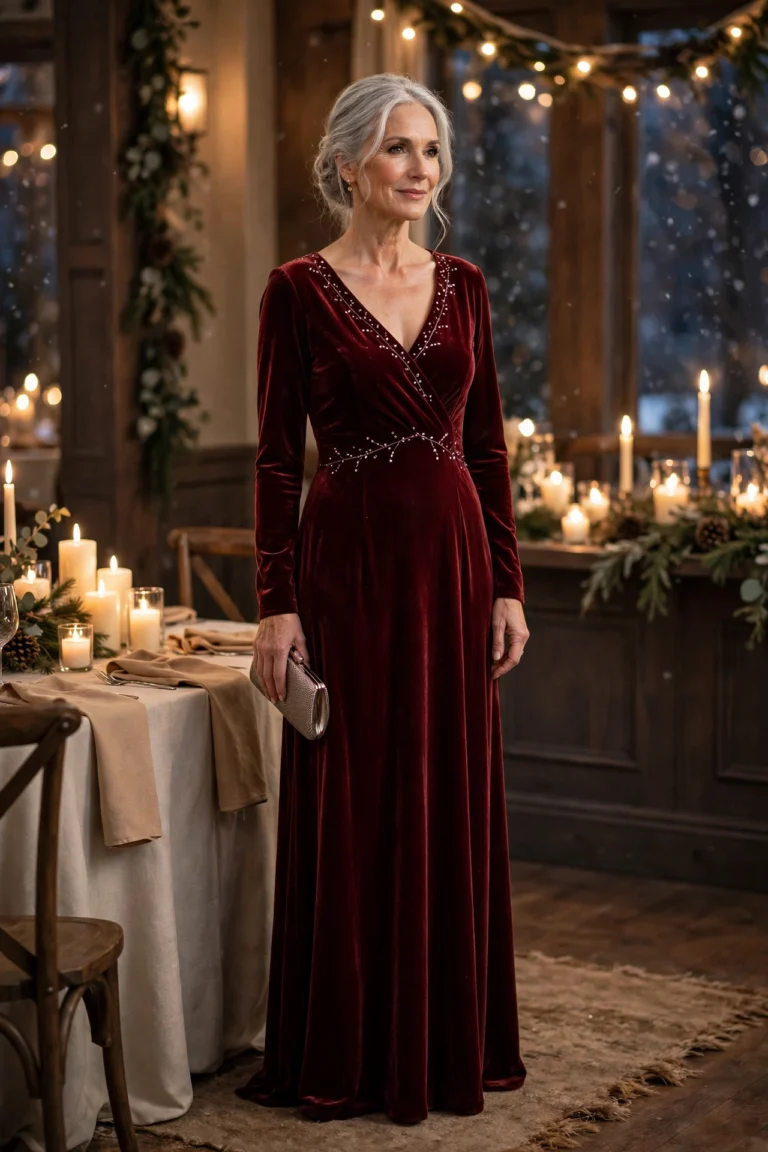
Evening weddings call for longer, richer dresses, and long sleeves are a gift here. They keep you warm, they look elegant, and they mean you do not need to carry a wrap all night.
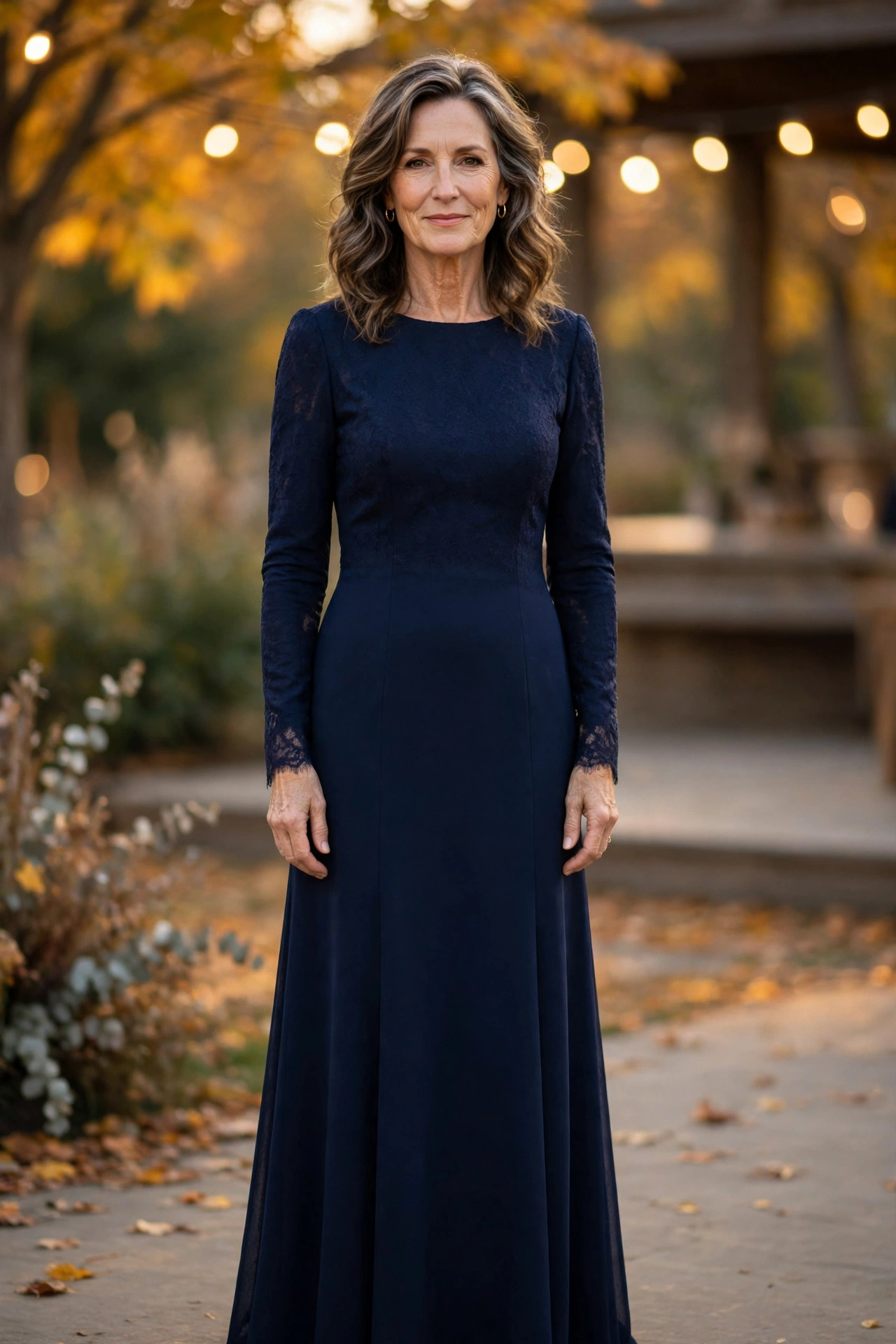
- A floor-length navy chiffon gown with long sleeves. I love this for a formal fall wedding because it covers your arms, moves well, and never looks overdone. Keep the jewellery to earrings and a bracelet, and let the dress do the talking.
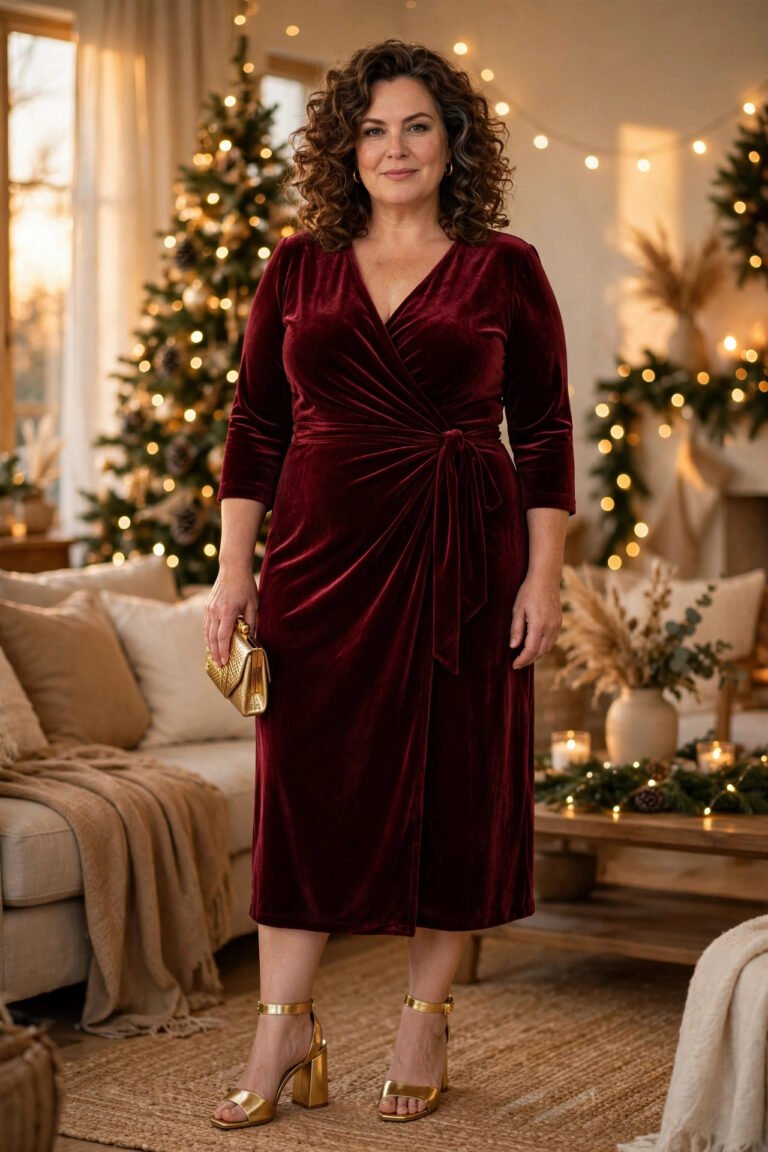
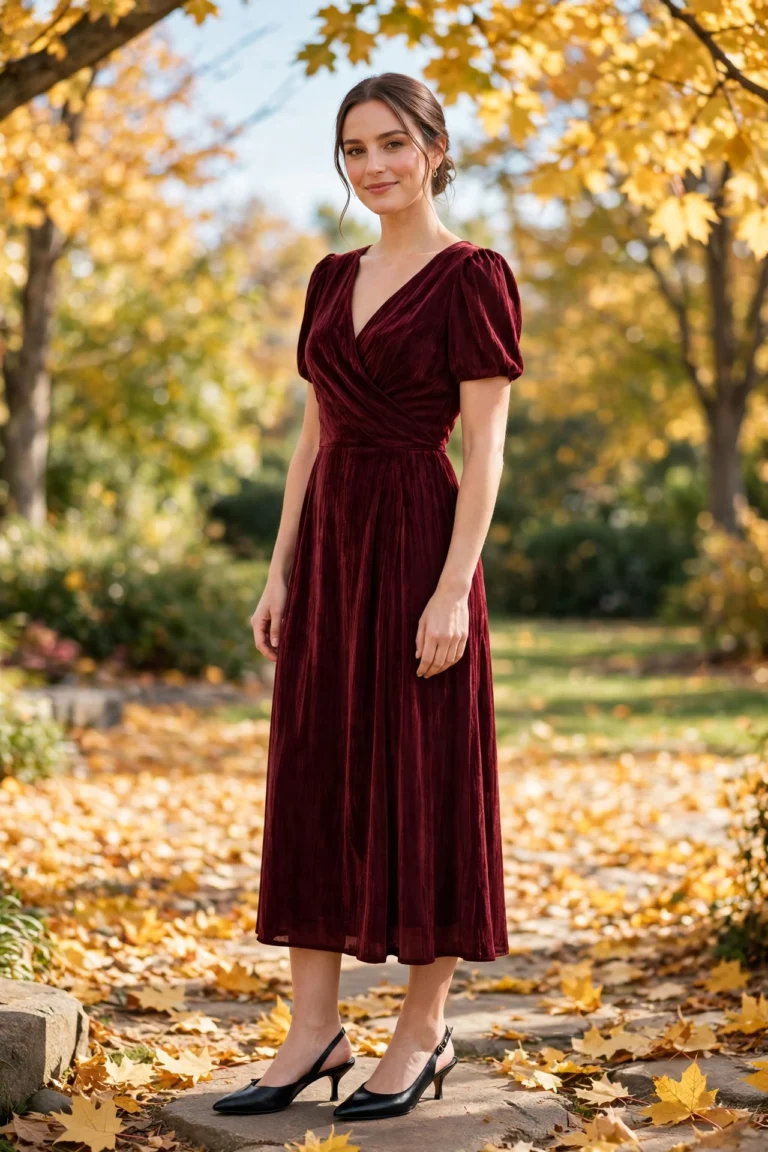
- A burgundy velvet midi dress with long sleeves. Velvet is a fall hero fabric. It looks rich, it feels warm, and it needs almost no jewellery. I keep the shoes simple with velvet, so the dress stays the star.
- A forest green velvet maxi dress with a simple V-neck and long sleeves. Velvet in a long length is one of the most forgiving formal choices I know. It looks warm, rich, and calm, and it suits a wide range of ages.
- A black crepe maxi dress with long sleeves and a high slit for walking. A slit is practical, not just stylish — it lets you walk, sit, and dance without fighting the fabric. I keep the slit modest and the shoes simple.
- A wine-red satin maxi dress with long sleeves and a draped waist. Draping is kind to the middle, and satin in wine red looks expensive in evening light. I always check the length with my actual heels, because a maxi that drags on the floor will get stepped on.
- A charcoal crepe maxi dress with long sleeves and gold jewellery. Charcoal is softer than black and just as formal in the evening. I love this one because it is easy to rewear to a formal dinner later, so you get a lot of wear out of it.
My tip for this group: formal does not mean uncomfortable. If you cannot walk up stairs in the dress, change the shoes, not the dress. A lower block heel in a matching colour will save your night.
3. Wraps, jackets and easy cover-ups — Dresses 14 to 19
Some of us like a little more structure, or a jacket we can take off for dancing. This group is for you. These dresses come with their own cover-up built in, so nothing slips, nothing gaps, and nothing needs adjusting.
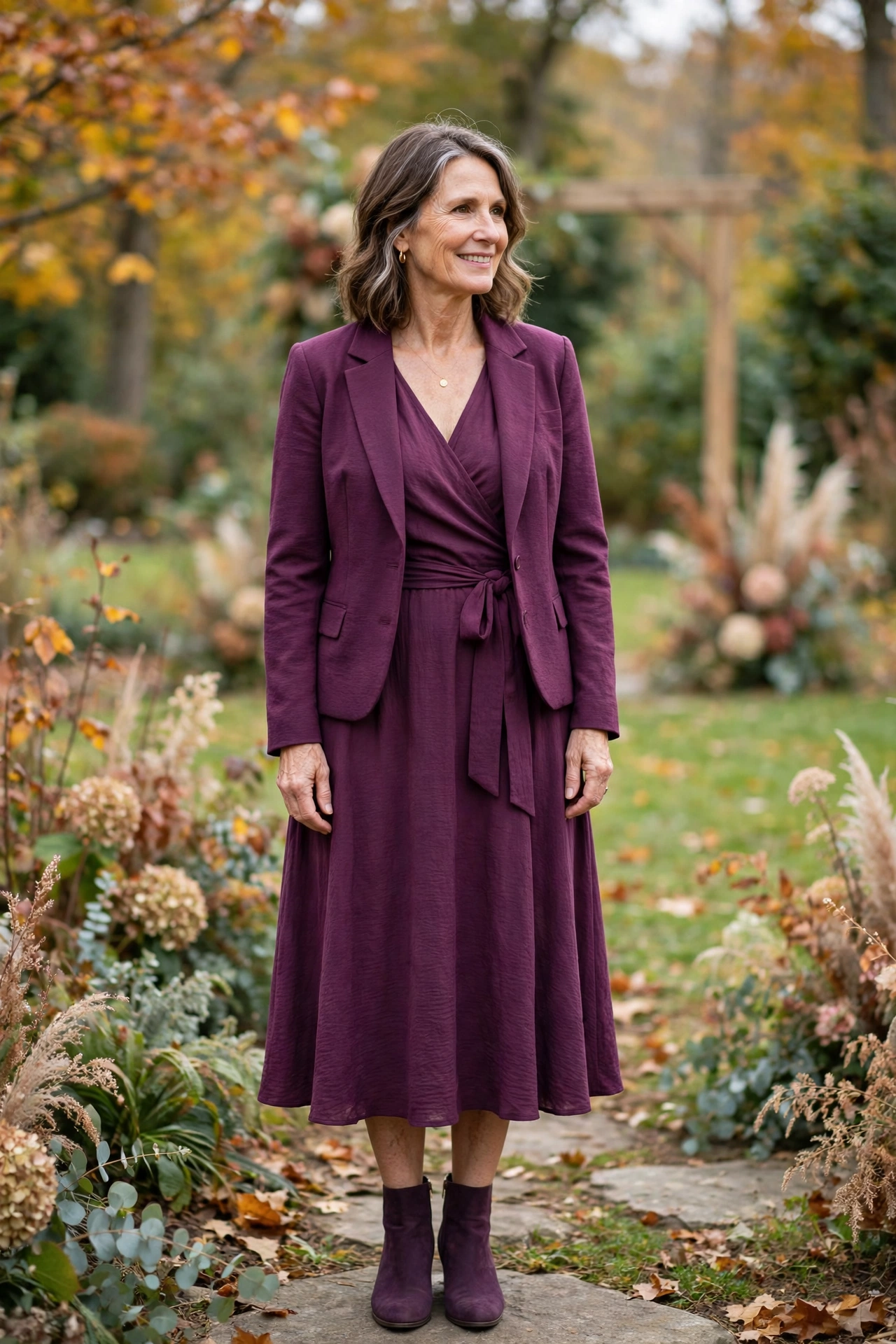
- A plum wrap midi dress with three-quarter sleeves and a matching jacket. I love a matching set because it looks finished from every angle. Wear the jacket for the ceremony, take it off for dinner, and you have two looks in one dress.
- A navy lace-overlay midi dress with three-quarter sleeves and a lined bodice. Lace can look expensive or old-fashioned, and the difference is the lining and the length. Keep the lace modern: a clean neckline, a midi length, and no fussy sleeves.
- A rust-coloured wrap dress in heavier crepe with long sleeves. This is the dress I recommend when you are not sure about the venue. It works indoors and outdoors, in daylight and in the evening, and it suits a wide range of shoes.
- An emerald green one-shoulder midi dress with a sheer long sleeve on one side. One shoulder looks elegant without trying too hard, and the sheer sleeve gives you coverage while keeping the shape of the dress. I keep my hair up with this neckline, so the dress shows properly.
- A deep plum satin wrap maxi dress with long sleeves. A wrap maxi gives you a defined waist and an adjustable fit, which is a gift when you are between sizes. I pair it with gold shoes or a gold clutch, but not both at full strength.
- A wine-red chiffon maxi dress with a lined bodice, long sleeves, and a matching scarf. Chiffon in a long length, with sleeves, is a lovely formal choice for a guest who does not want velvet or satin. It moves well on the dance floor, which matters more than people admit.
My tip for this group: if you buy a dress with a jacket, check that the jacket closes comfortably when you sit down. A jacket that only fits when you stand up is not a jacket you will enjoy wearing.
How to choose your length, fit and colour
Length first. For most daytime weddings, a midi length that ends below the knee and above the ankle is the safest choice. It works on grass, it works on a dance floor, and it shows your shoes. For formal evening weddings, a maxi or floor-length dress is right. I always try the dress on with the shoes I will wear, because a dress that drags on the floor is a dress that will get stepped on.
Fit second. The dress should fit your shoulders and waist, with no gaping at the chest and no pulling at the hips. A dress that fits well in those two places will always look better than a famous label in the wrong size. If you are between sizes, I always take the larger one and have it taken in at the waist. That is a small cost, and it changes everything.
Colour third. In fall, I reach for burgundy, forest green, navy, plum, chocolate brown, and deep teal. These colours flatter mature skin and look rich in photos. Black works well in the evening, especially with gold jewellery or a coloured clutch to soften it. I avoid white, ivory, and cream, because those colours belong to the bride.
And a word on shapewear: you do not need it. A dress in a good fabric, in the right size, with a sleeve that fits, will look good on your real body. If a dress only looks good with a lot of extra help underneath, it is not the right dress. Buy the dress that works with normal underwear, and spend the money you saved on shoes you can actually walk in.
Shoes, bags and warmth: the finishing touches I never skip
I have seen a beautiful dress ruined by the wrong shoes, so I plan shoes early. For grass, choose block heels or elegant flats. For a long evening, choose a heel you have already walked in, not a brand-new pair. For a formal wedding, choose a small clutch, not a day bag. A kitten heel is my favourite wedding shoe after 50 — it gives you height without hurting your feet, and it works with almost every dress in this guide.
For fall warmth, I pack a wrap, a tailored jacket, or a light coat that matches the dress. I never rely on the venue being warm. A beautiful wrap in a neutral colour — black, camel, or navy — will work with almost every dress here.
I also keep a tiny kit in my clutch: a safety pin, a plaster for blisters, and lipstick for touch-ups. It sounds small, but it has saved me more than once.
If you are shopping on a budget too, start with our fall wedding guest dresses under $150 — the same fabric and fit rules apply there, and every dress in that guide was chosen to look expensive without a designer price. And if you want more ideas in this style, browse our wedding guest outfits for occasion looks that work in real life, not just in photos.
What not to wear, even if it looks lovely on the hanger
Do not wear white, ivory, cream, or a dress that looks bridal in photos. Do not wear a dress with a train you cannot manage. Do not wear neon colours to a formal evening wedding, and do not wear denim, trainers, or a casual day dress to a semi-formal or formal wedding.
I also avoid a dress that needs shapewear to work, a dress I have to keep pulling up or pulling down, and a dress in thin, shiny fabric that clings. Comfort reads as confidence, and confidence is what makes a simple dress look expensive.
Conclusion: pick the sleeve first, then the dress
If you take one thing from this guide, let it be this: start with the sleeve length that suits you, then find your dress inside that group. Pick two or three styles you love, try them with the shoes you already own, and sit down in each one before you buy. The dress that fits well, feels comfortable, and matches the time and venue will always look more expensive than a dress that fights you all night.
I hope this list saves you time, money, and that familiar pre-wedding panic in front of the mirror. Fall weddings are beautiful, and you deserve to enjoy them without worrying about your outfit.
For a second opinion on formality before you buy, I check the Emily Post Institute’s wedding guest guide — see their wedding guest attire guide — because it explains the dress codes in plain, practical terms. Then I trust my own rule: if I feel calm, comfortable, and like myself in the dress, it is the right one.
2 Comments