
Can You Wear Black to a Wedding in 2026? Etiquette, Answered — Plus What to Wear Instead
I have a black dress I love. It fits me well, it never wrinkles, and I feel calm and confident every time I wear it. So when a wedding invitation arrived last fall, my first thought was simple: I will wear the black dress. Then my second thought arrived right behind it: wait, can you wear black to a wedding?
I asked three friends and got three different answers. One said black is totally fine now. One said never, it is a funeral colour. One said it depends on the wedding. So I did what I always do when the advice disagrees — I read the etiquette guides, I asked a bride, and I looked at what real guests actually wore at the last few weddings I went to. This guide is everything I learned, in plain English. The short answer, the old rule, when black works, when it does not, and what to wear instead if you would rather not risk it.
The short answer: yes, you can wear black to a wedding in 2026
Yes, you can wear black to a wedding in 2026. For most modern weddings, black is now a normal, accepted guest colour. Brides wear black dresses themselves. Bridesmaids wear black. Guests wear black to evening weddings, city weddings, and formal weddings all the time, and nobody thinks twice about it.
But — and this is the part that matters — black is fine when it looks like a party outfit, not like a funeral outfit. A black dress in a good fabric, with colour somewhere in the outfit, reads as elegant and formal. A plain black dress with plain black shoes, a plain black bag, and no jewellery can read as mourning, and that is the look to avoid. So the question is not really “can I wear black?” The question is “does my black outfit look like I am going to a wedding?”
My simple rule is this: if your black outfit has one clear sign of celebration — a bright scarf, colourful jewellery, a bold lip, a metallic shoe, a patterned shawl — you are fine. If it has none of those, add one before you leave the house. That one small change is the whole difference between a funeral look and a wedding look.
Where the old “no black” rule came from
The old rule came from a time when black meant one thing: mourning. In the past, black at a wedding was seen as disrespectful, because it looked like you were sad about the marriage. White was the bride’s colour, and black was the colour of grief. Guests were expected to wear bright, happy colours to celebrate the couple.
That rule made sense in its time, and some of it still holds. You should never wear white, ivory, or cream to a wedding, because those are the bride’s colours. But black has changed. Fashion changed first — black became the colour of evening elegance — and then weddings changed too. Evening weddings, city venues, and formal dress codes made black a natural choice. Today, most etiquette experts say black is acceptable for guests, as long as the outfit is festive and the wedding is not a very traditional daytime ceremony where the couple’s family holds old-fashioned views.
I still respect the old rule in one way: I never wear black to a wedding without checking the invitation first. The invitation tells you the time, the venue, and the dress code, and those three details tell you whether black fits the day. A formal evening wedding in a hotel ballroom? Black is perfect. A morning garden ceremony at a church with a very traditional family? I would choose a colour instead.
When black is fine: four situations where it works beautifully
Black works best in these four situations, and I have worn it happily in all of them.
First, evening and formal weddings. If the wedding starts in the late afternoon or evening, and the venue is a hotel, a ballroom, or a country house, black is a natural fit. Evening light makes black look rich and elegant, and a formal room makes a black dress look like it belongs. If the invitation says black-tie optional or formal, black is one of the safest choices you can make. If you want help decoding that dress code, read our guide to black-tie optional, decoded — it explains exactly what to wear for a formal evening wedding.
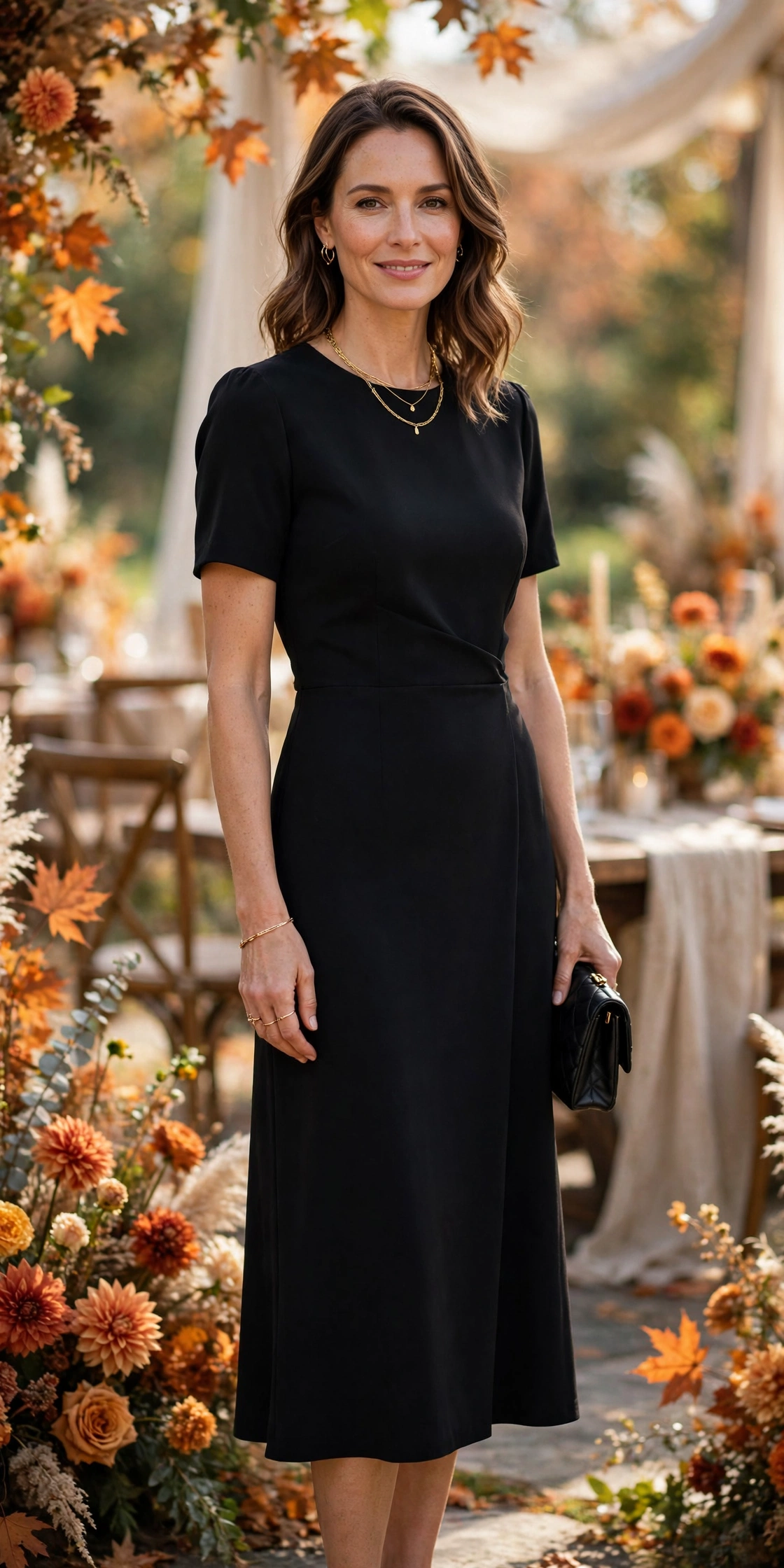
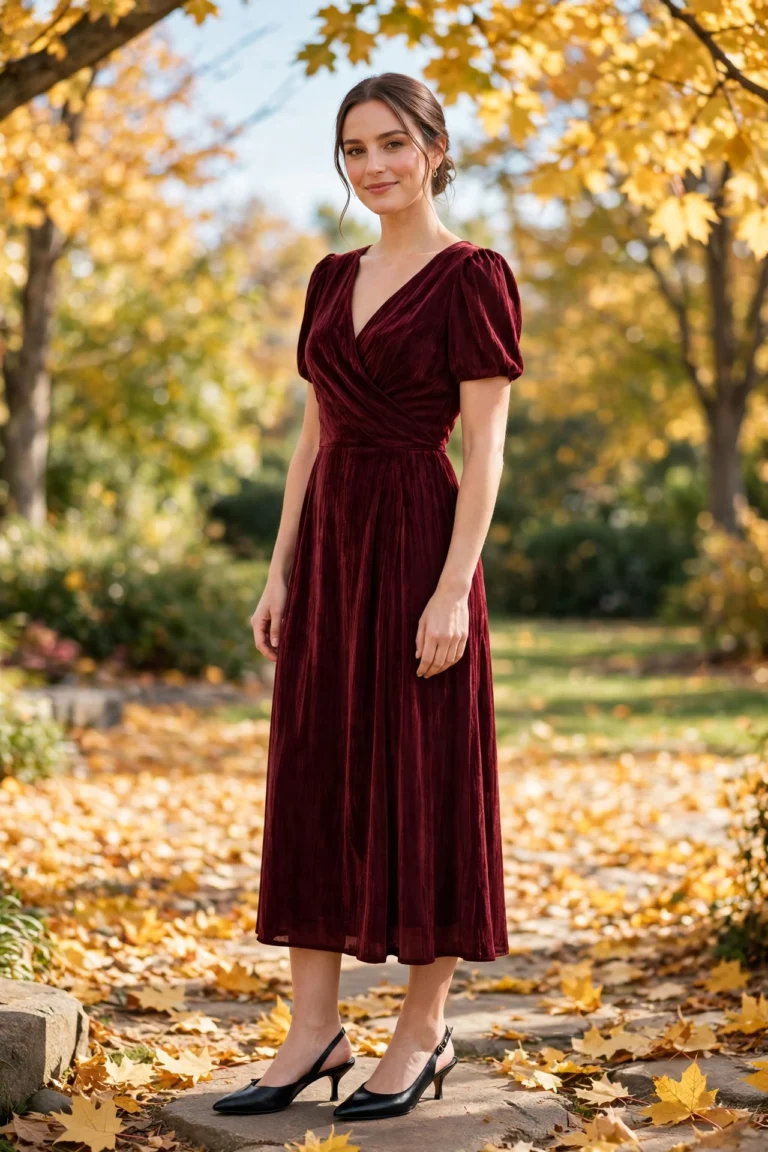
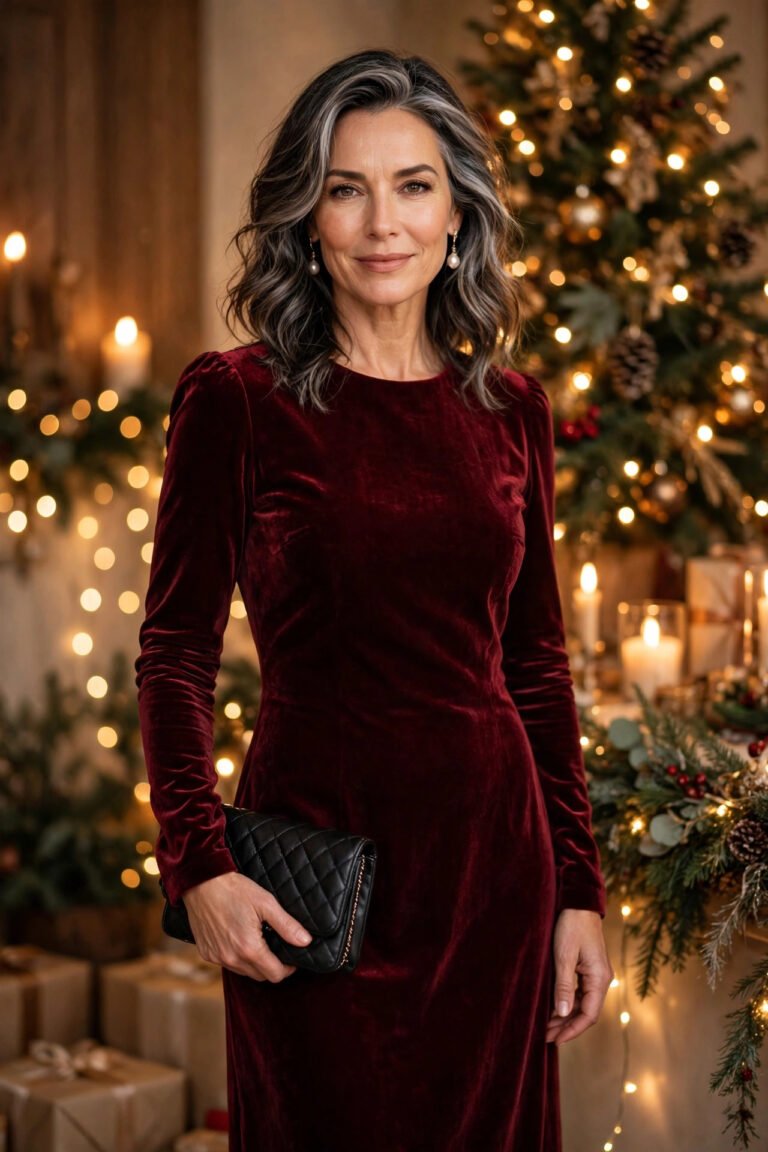
Second, fall and winter weddings. Black is a fall colour. It looks right next to autumn leaves, warm candlelight, and deep red flowers. A black velvet dress in October or a black crepe dress in December looks seasonal and smart, not sombre. In summer, black can feel heavy in bright sunlight, but in fall and winter it feels natural.
Third, city weddings and modern venues. A modern city wedding — a rooftop, a gallery, a smart restaurant — is the easiest place to wear black. The style of the venue is modern, the guests dress in a modern way, and black fits the mood perfectly. I wore black to a city wedding last year, and I was one of five guests in black. Nobody noticed, because we all looked like we were at a party.
Fourth, when the bride says it is fine. Some couples now write on their wedding website that guests may wear any colour, or they tell their guests directly that black is welcome. If the couple has said that, believe them. It is their day, and their word beats any old rule.
When to skip black: four situations where a colour is safer
There are still weddings where I would not wear black, and I want to be honest about them.
First, a daytime garden or outdoor ceremony. Black in bright midday sun can look heavy and hot, and in photos it can look flat against green grass and white flowers. A colour — navy, burgundy, teal, or a soft floral — photographs better outdoors and feels more in tune with the setting.
Second, a very traditional or religious ceremony. Some families and some faiths still see black as a mourning colour, and a church or temple ceremony with a very traditional family is not the place to test the new rule. If you know the family is old-fashioned, or if the ceremony is in a place of worship with strict customs, choose a colour. Being respectful matters more than being right.
Third, when the invitation or the couple asks for something else. Some couples ask guests to wear a colour palette — pastels, jewel tones, or a specific theme. If they have asked, follow it. Black is not a pastel, and it is not a jewel tone. Follow the couple’s request, because they planned it for their photos.
Fourth, when you are the mother of the bride or groom, or in the wedding party. If you are close family or part of the wedding party, ask the bride what she wants. Mothers and bridesmaids are in many photos, and the bride may have a colour plan. A quick question saves a lot of worry.
My tip for all four of these: if you feel even a little unsure, wear a colour. You will enjoy the wedding more when you are not wondering whether your outfit is wrong. Confidence is the best thing you can wear to a wedding.
How to wear black the right way
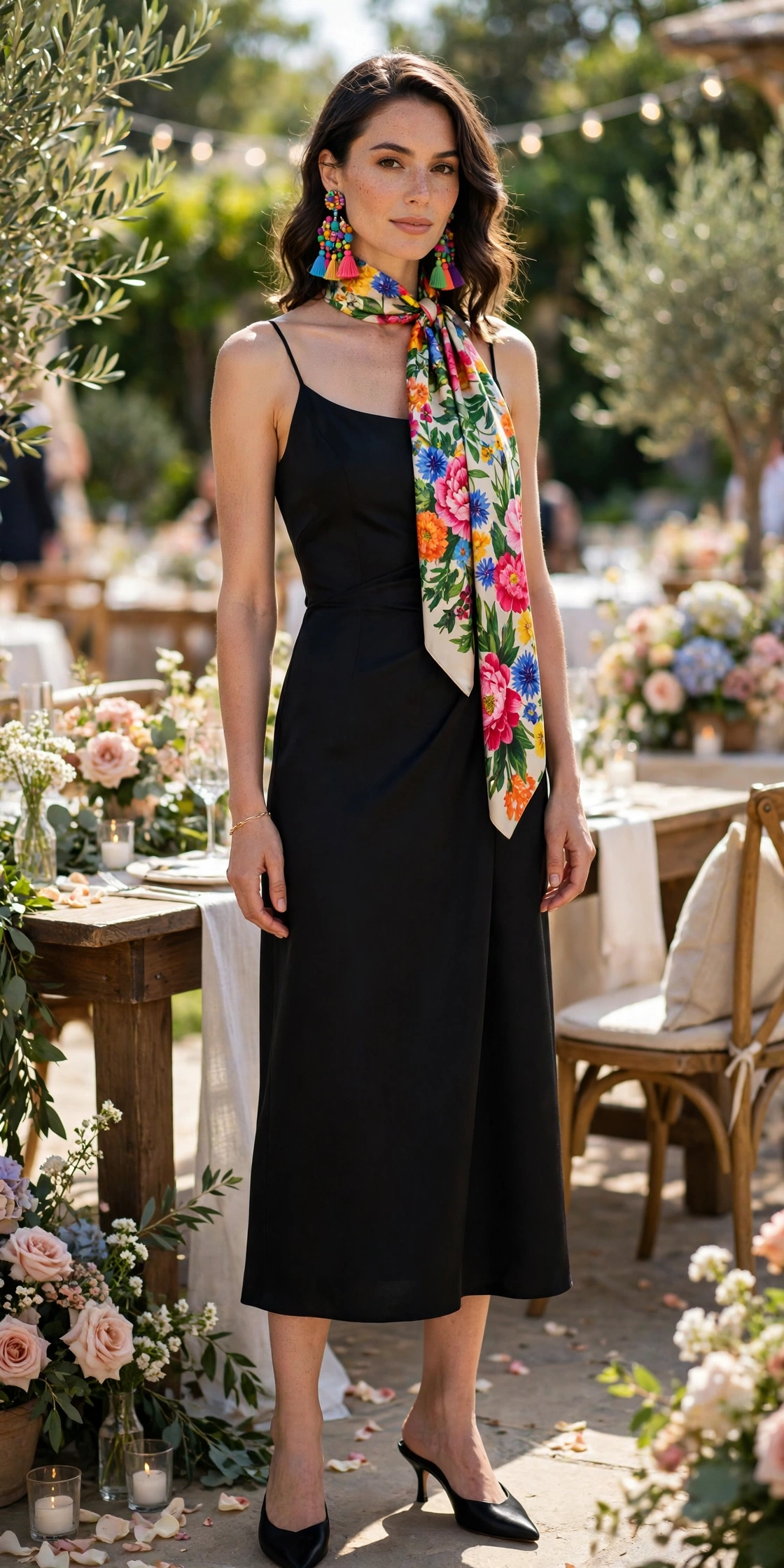
If you decide to wear black, here is how I make it look like a wedding outfit and not a funeral outfit. These are the small choices that change everything.
Start with the fabric. A black dress in velvet, satin, crepe, or a good lined lace looks formal and rich. A black dress in thin jersey, cotton, or a plain stretch fabric looks flat and casual. The fabric is the first thing people notice, even if they do not know they are noticing it. I always choose a fabric with a little weight and a little shine, because it catches the light and looks expensive.
Then add colour in one place. This is my most important tip. Pick one colourful piece and let it do the work: a bright floral silk scarf, a pair of colourful statement earrings, a bold red or pink lip, a metallic gold shoe, or a patterned shawl. One colour pop is enough. Two is fine. Three starts to look busy. I once wore a black dress with a bright floral scarf and gold earrings, and three different guests asked me where the scarf was from. The black dress was the base; the colour was the outfit.
Keep the shape feminine and festive. A black dress with a little shape — a wrap waist, a soft flare, a slit for walking, or a pretty neckline — looks like a party dress. A straight, shapeless black dress with long sleeves and a high neck can look like office wear. I look for one soft, feminine detail in the dress: a wrap, a drape, a flare, or a V-neck. That detail is what makes the dress feel like a celebration.
Choose your shoes and bag with care. Black shoes and a black bag with a black dress is the combination that tips the outfit toward mourning. I break it up: nude heels, metallic gold shoes, or a small clutch in a colour. If I wear black shoes, I carry a coloured or metallic bag. If I carry a black bag, I wear a coloured shoe. One black accessory is fine; three black accessories in a row is too much.
Add jewellery, and keep your hair and makeup warm. Gold jewellery warms up black beautifully. A simple gold necklace or gold earrings, plus a warm lip colour and a little blush, will make a black outfit look alive. I never wear a black dress with pale makeup and no jewellery, because that is the combination that looks tired and sad. Warmth is the fix.
My tip for this section: try the whole outfit on together, in daylight, before the wedding day. Stand in front of a mirror and ask yourself one question: do I look like I am going to a party? If the answer is yes, you are done. If the answer is no, add one colour pop and check again.
What to wear instead: jewel tones that always work
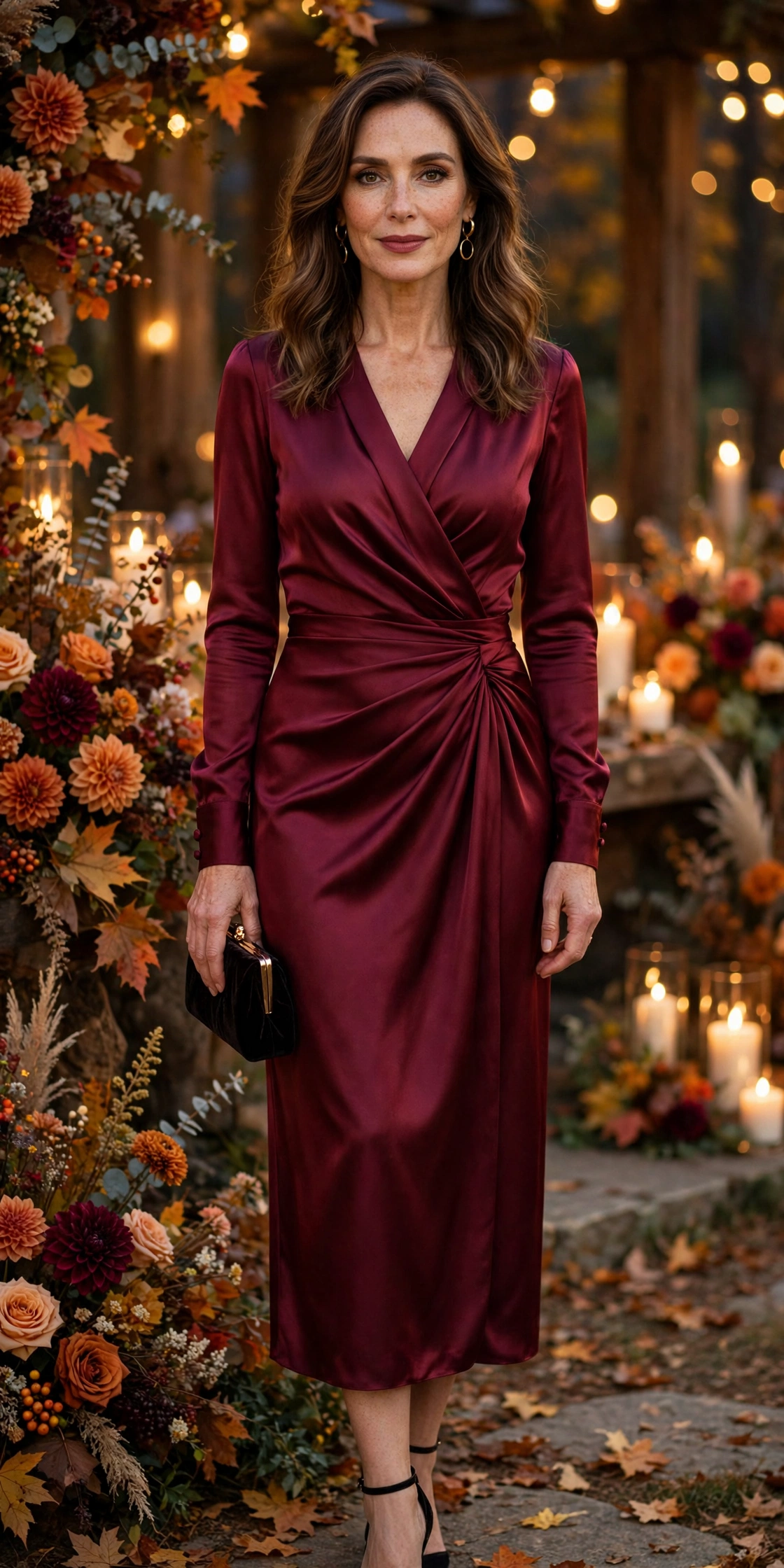
If you would rather not wear black at all, jewel tones are my first suggestion. Burgundy, emerald, navy, plum, and teal are rich, flattering, and formal enough for almost any wedding. They look expensive in photos, they suit a wide range of skin tones, and they work in every season.
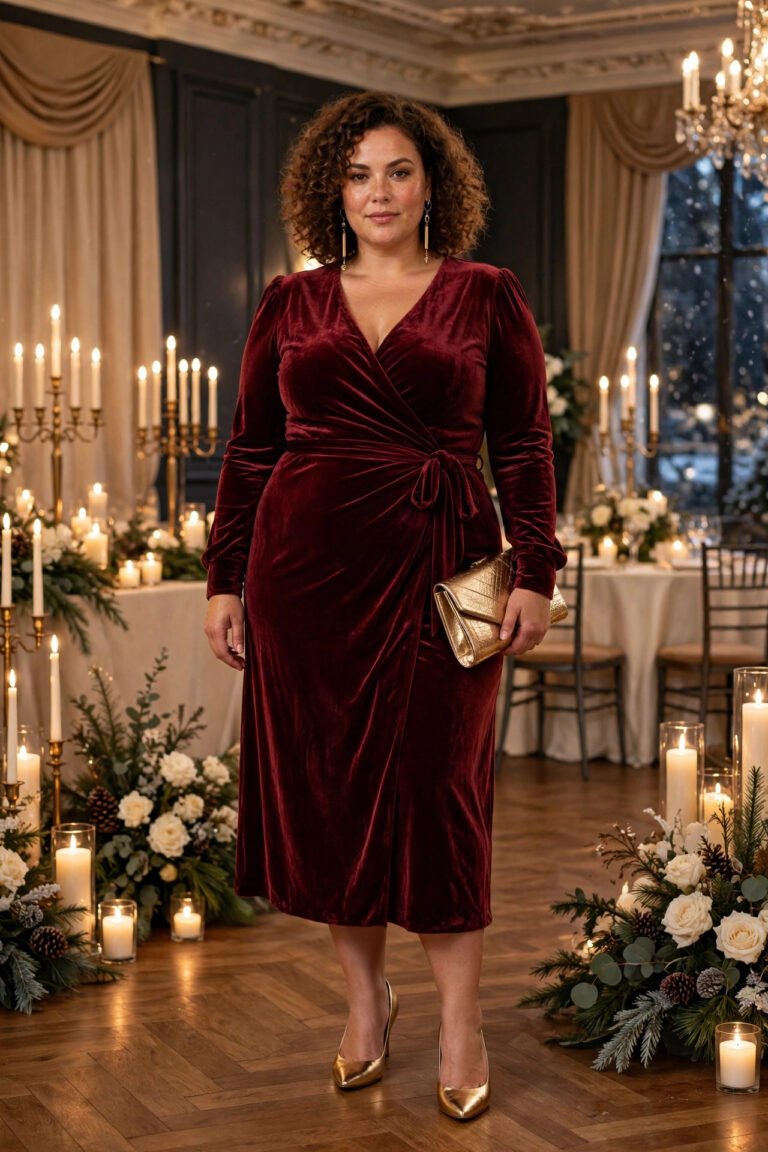
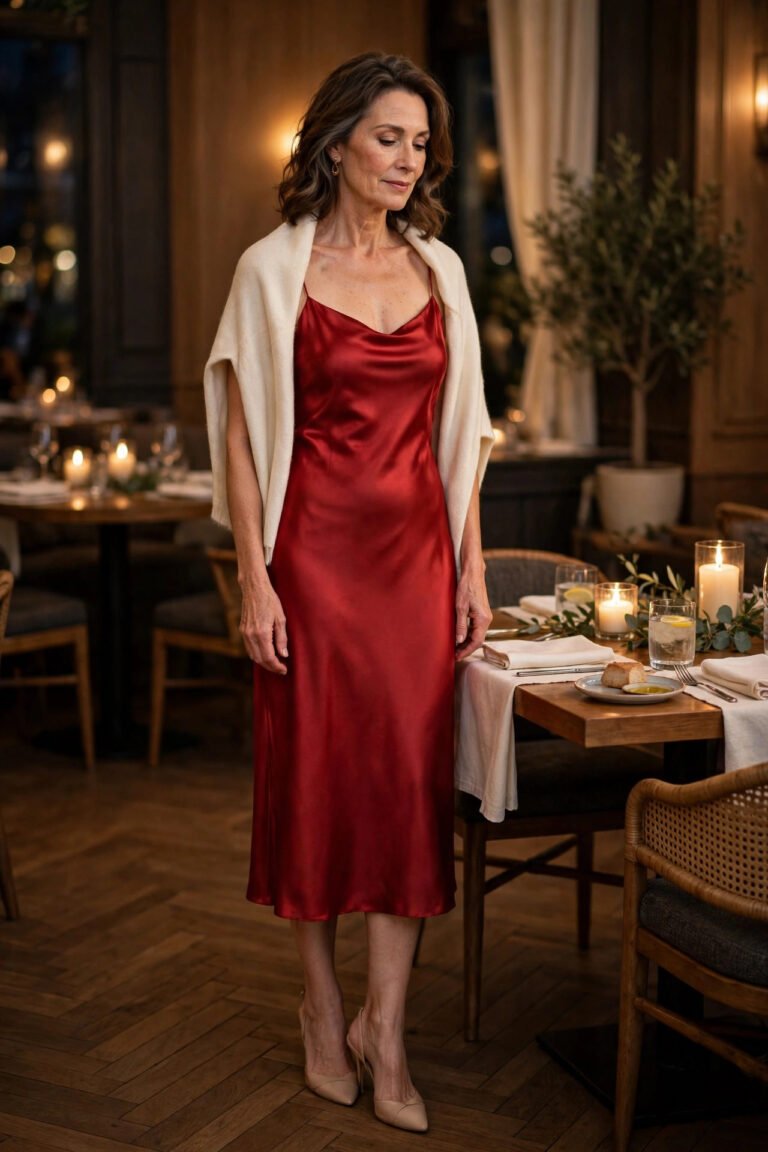
My favourite is burgundy. A burgundy satin midi dress with a draped waist is one of the most forgiving wedding guest outfits I know. It suits fair skin and deep skin, it looks warm in evening light, and it never clashes with the flowers. I pair it with gold earrings and a small dark clutch, and I keep the shoes simple. If you are still choosing the dress itself, start with our fall wedding guest dresses under $150 — many of the dresses there are jewel tones chosen to look expensive without a designer price.
Emerald is my second favourite. An emerald green midi dress with a simple neckline photographs beautifully against dark wood, candlelight, and autumn flowers. I keep my hair up with a simple neckline, so the shape of the dress shows, and I choose gold or nude shoes. Emerald is a strong colour, so I keep the jewellery to one piece — gold earrings or a simple bracelet, not both.
Navy is the safest jewel tone of all. A navy dress in a good fabric is almost as versatile as black, but it never reads as mourning. I love navy for a guest who wants to look polished without standing out. A navy crepe midi dress with a wrap waist, nude heels, and a small clutch is an outfit I would wear to almost any wedding, in any season.
My tip for jewel tones: try the colour in daylight before you buy it. Some jewel tones look rich in the shop and flat at home. Hold the dress up near your face in natural light. If your face looks bright and warm, the colour suits you. If your face looks tired or grey, try the next shade.
What to wear instead: navy, floral, and soft metallics
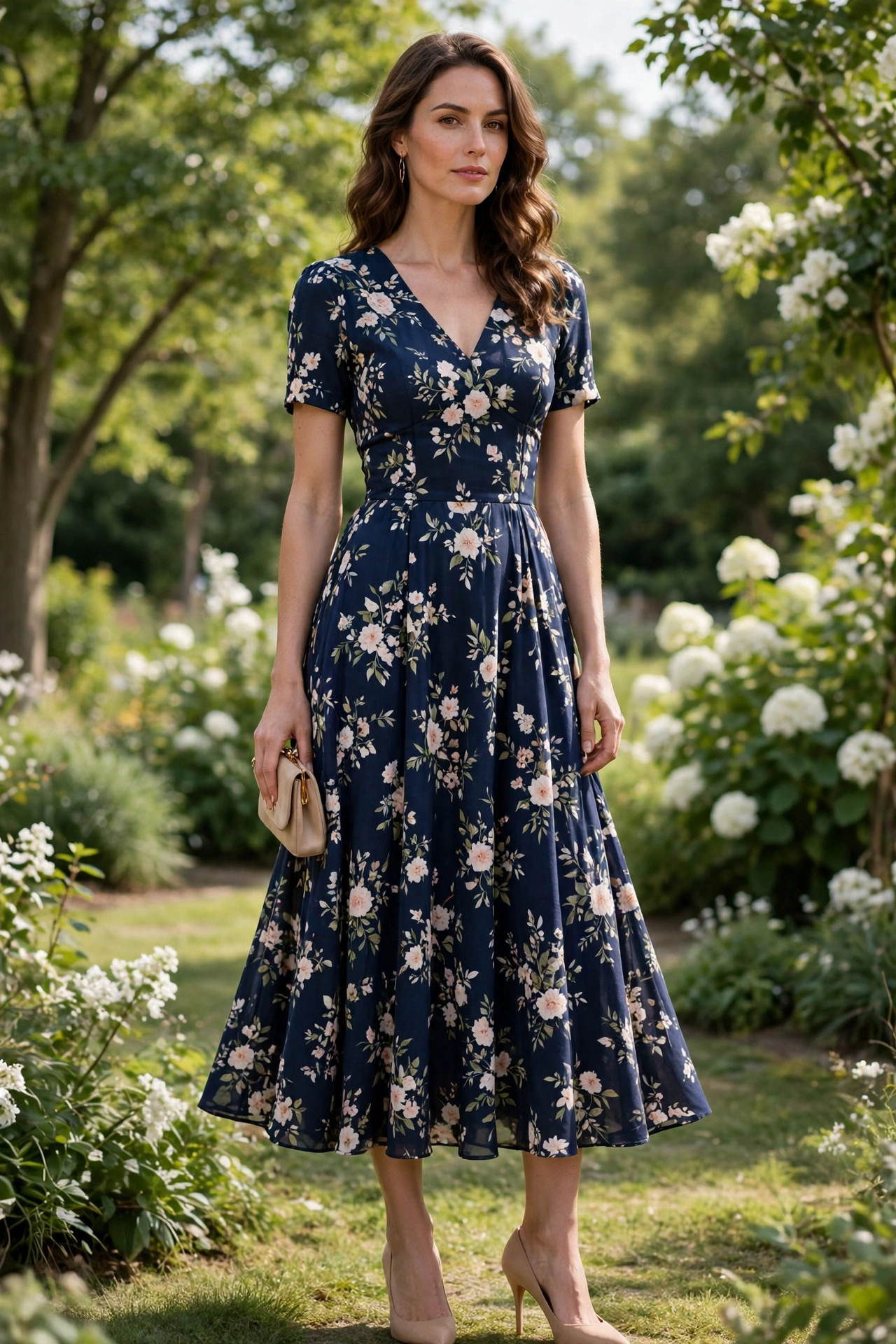
If jewel tones are not your style, navy, floral prints, and soft metallics are three more options that always work.
Navy deserves its own mention, because it is the colour I suggest to every friend who asks me what to wear when she does not want black. A navy dress is formal, slimming, and easy to accessorise. I pair navy with gold jewellery and nude or metallic shoes, and I carry a small clutch in navy, gold, or cream. Navy works for a daytime wedding, an evening wedding, a church ceremony, and a garden party. It is the one colour I would pack if I had to choose a wedding outfit blind.
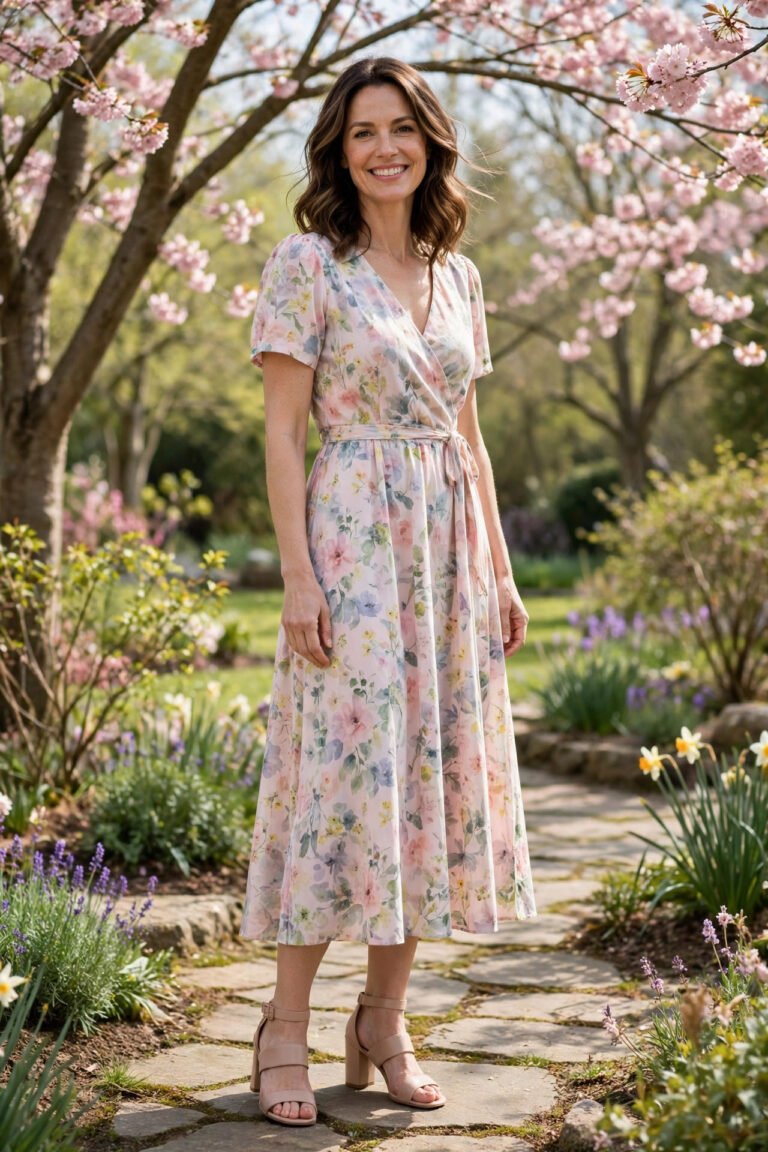
Floral prints are my pick for a daytime or garden wedding. A navy floral midi dress, or a soft floral dress in burgundy and cream, looks fresh and happy in daylight. I choose a print with a dark background and a clear pattern, because it photographs well and looks more formal than a pale, tiny print. I keep the shoes simple — nude or metallic — and I let the print be the star. One warning: avoid a white or cream background on a floral dress, because from a distance it can look like a white dress, and white belongs to the bride.
Soft metallics are my pick for an evening wedding when I want to shine a little. A dress with a soft gold or bronze thread, or a champagne satin midi dress, looks rich under warm lights without being loud. I pair a metallic dress with plain accessories — plain shoes, a plain clutch — because the dress already has enough shine. One shiny piece, plus plain accessories, looks expensive. Three shiny pieces look like a costume.
My tip for this group: pick the colour that makes you feel like yourself. If you love navy, wear navy. If you love florals, wear a floral. The best wedding guest outfit is the one you feel calm and happy in, not the one a list told you to wear.
What not to wear, whatever colour you choose
A few rules apply no matter what colour you pick. Do not wear white, ivory, cream, or anything that could be mistaken for a bridal dress. Do not wear a dress with a train you cannot manage, or a dress that needs a lot of extra help underneath to work. Do not wear denim, trainers, sandals, or a casual day dress to a formal wedding. Do not wear neon colours, or a dress that is short, tight, and shiny all at once — pick one of those qualities, not all three.
I also avoid a dress I have to keep pulling up, pulling down, or adjusting. Comfort reads as confidence, and confidence is what makes a simple outfit look expensive. Try the dress on, sit down in it, walk up a flight of stairs in it, and raise your arms in it. If you can do all four without a struggle, the dress is right.
Conclusion: black is fine — make it festive, or pick a colour you love
So, can you wear black to a wedding in 2026? Yes, you can. For most modern weddings, black is now a normal, accepted guest colour. Wear it to an evening wedding, a formal wedding, a fall or winter wedding, or a city wedding, and you will fit right in. Just make sure the outfit looks like a celebration: a good fabric, one colour pop, warm jewellery, and a shoe or bag that is not black. If the wedding is a daytime garden ceremony, a very traditional religious service, or a wedding where the couple asked for a colour palette, choose a colour instead — jewel tones, navy, a floral print, or a soft metallic will all work beautifully.
If you want a second opinion before you buy, I check the Emily Post Institute’s wedding etiquette guide — see their wedding etiquette advice — because it explains the dress codes and guest rules in plain, practical terms. Then I trust my own rule: if I feel calm, comfortable, and like myself in the outfit, it is the right one. Black or burgundy, navy or floral — the best wedding guest outfit is the one that lets you forget about your dress and enjoy the day.
2 Comments